The question we hear most often from business owners this year is no longer “what is AI”, but “which part of my operations should come first”. That is exactly the right question — because successful automation almost always starts with the boring processes, not the spectacular ones.
1. Repetitive Customer Questions
Operating hours, order status, payment methods — 60–70% of customer service conversations usually revolve around the same questions. A chatbot trained on your own business data can answer them around the clock, and hand the rest over to a human with full context.
2. Cross-System Data Entry
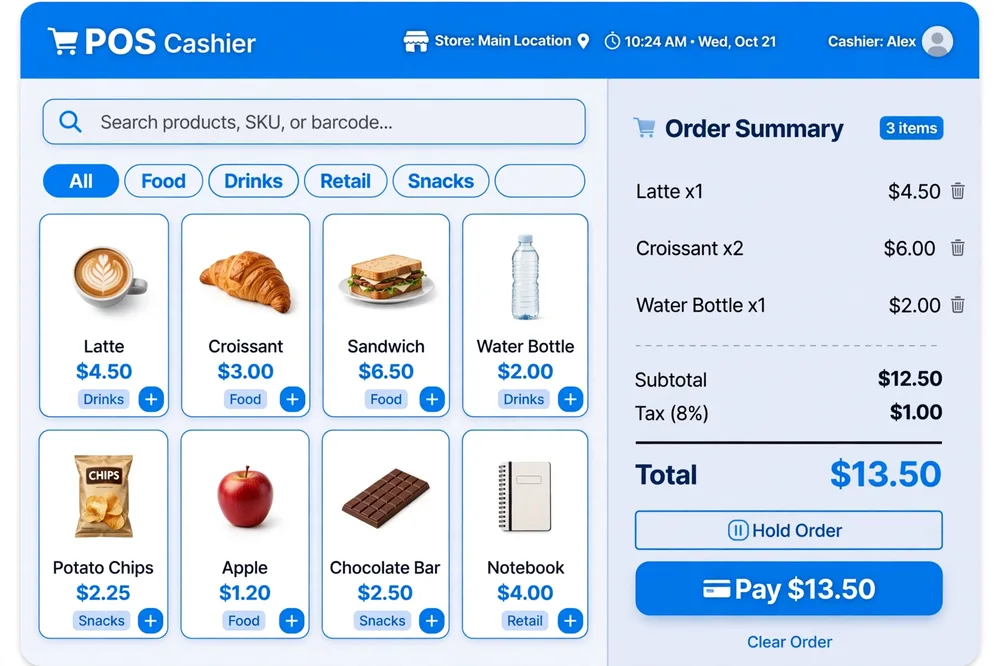
Orders from a marketplace get copied into a spreadsheet, then into the POS app, then into a report. Every manual copy is a chance for a typo. Integrating the systems cuts this chain down to zero touches.
Custom IT Solutions
A tailored blend of software, hardware and IT services for maximum efficiency.
3. Periodic Reports and Reminders
Weekly recaps, invoices that need chasing, stock running low — the data already exists; what is missing is the automated bridge. A system that schedules and sends them itself frees your team from the work of remembering.
Start with One, Measure, Then Expand
The most common mistake is trying to automate everything at once. Pick the single process with the highest volume and the most felt pain, measure the hours saved over a month, then let that number guide the next step.
- Start with the highest-volume process
- Measure the working hours actually saved
- Expand one by one, based on the numbers
The seven processes in this article are only a starting point. What separates businesses that automate successfully is not the technology — it is the discipline to start with one right process.